Student Support Services
September 14, 2026 – Edition 12

Supporting Student Mental Health
Together, we can create a school community where everyone feels seen, supported and valued. Taking the time to check in with someone today could make a lasting difference.
Sometimes the most important thing we can offer someone who may be struggling is our time, understanding and a listening ear. Changes such as becoming withdrawn, unusually tired, irritable, or less engaged than usual may be signs that a person needs extra support.
It’s also important to remember that mental health can be understood differently across cultures. In some families and communities, talking about emotional wellbeing may feel uncomfortable, unfamiliar, or carry stigma. Approaching conversations with curiosity, empathy, respect and cultural sensitivity can help people feel safe and supported.
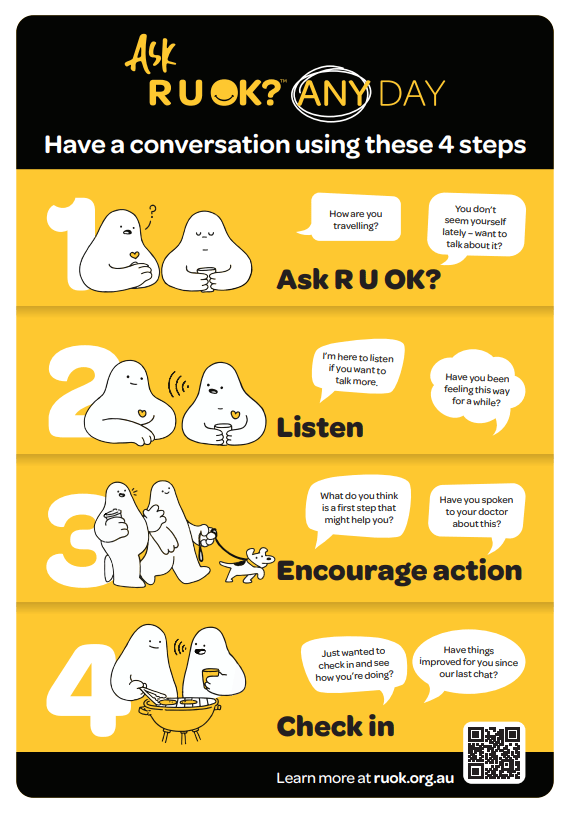
If you’re concerned about someone, reach out with kindness and ask open-ended questions such as:
- “How have you been feeling lately?”
- “What’s been on your mind?”
- “How are things going for you at the moment?”
- “What support would be most helpful right now?”
Listen without judgment and avoid rushing to offer solutions. Small acts of care, such as checking in regularly, sharing a walk, or helping with everyday tasks, can make a meaningful difference.
Parents and carers can also play an important role in supporting students whose friends may be experiencing mental health challenges. Encourage your child to be a caring friend but remind them that they do not need to carry their friend’s worries alone.
Let them know it is okay to speak with a trusted adult, parent, school staff member, or counsellor if they are worried about a friend’s wellbeing or safety. Being supportive is important, but students should never feel solely responsible for helping a friend through a difficult time.
Call to Action
Let’s continue to build a caring and connected school community where everyone feels safe to ask for help and support one another. A simple conversation could make a big difference.
Remember, supporting others starts with looking after ourselves too. If you are concerned about someone’s immediate safety, call 000.
For support and advice, contact Lifeline or the Kids Helpline Phone Counselling Service on 1800 551 800, which provides free and confidential support for children and young people.
Mandy Barr, Sarah Quin, Joanne Devota-Rando
Counsellors